





Your car’s engine temperature needs to strike a delicate balance. The temperature must be hot enough for the engine to operate efficiently but not hot enough to damage any of your engine’s components. Your radiator’s purpose is to prevent this by removing the excess heat from your engine. Your radiator may suffer damage, and you’ll need a radiator repair. Your local Chrysler dealer will fix it.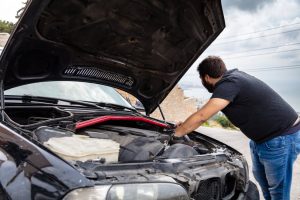
Does Your CDJR Need a Radiator Repair? Visit Your Chrysler Dealer Today
Broken Thermostat
When your engine temperature rises over 185F, liquid coolant will be released into your engine. This coolant will absorb the engine’s heat as it travels towards the radiator. In the radiator, the hot coolant will be cooled and it will be pumped through the engine again. The flow of coolant operates continuously at high speed to reduce the engine temperature as quickly as possible. The process will stop when your engine temperature returns to its preset level.
The flow of coolant is controlled by the thermostat. When the temperature in your engine rises over 185F, the thermostat opens and releases coolant. This simple component can, unfortunately, fail and jam open or closed. If the thermostat jams closed, it won’t release any coolant, and your engine temperature will quickly start to rise. If the thermostat jams open, it will continually release coolant. This will make your engine inefficient, and you’ll use more fuel.
Coolant Leak
Coolant is a mix of antifreeze and water, and one of its properties is the ability to absorb heat. This liquid is pink, yellow, or green, and it circulates through your engine whenever the temperature rises too high. It absorbs the heat in your engine produced by the combustion chamber and the numerous fast-moving parts and takes it to the radiator. The heat is removed in the radiator, and the coolant is cycled through the system to repeat the process.
A coolant leak can occur due to a faulty radiator cap, a hole in a radiator hose, or a worn clamp. Regardless of how it happens, a loss of coolant will cause your engine temperature to rise. Most coolant leaks are external, and you can find a puddle of coolant underneath your car. Sometimes, the coolant leaks internally, and it will land on hot engine parts. The coolant will burn up, but it will also leave behind rust on the metal parts.
Sludge in Your Radiator
The coolant that circulates through your engine absorbs heat, but it also absorbs rust particles and other engine debris. These contaminants reduce the speed of the coolant, which can cause your engine temperature to rise. When the contaminated coolant enters the radiator, some of this debris is deposited in the cooling tubes.
This debris in the tubes will build up, and it can block the tubes with sludge. The blocked tubes will prevent the coolant from being cooled, and your engine can start to overheat.
If your engine is running hotter than it should, call our service department immediately at Ed Martin CDJR.
image courtesy of pexels.com
Connect with us


