




Ed Martin Chrysler Dodge Jeep Ram

Blog / Anderson Jeep Service

How Often Should You Change Your Brake Pads at Your Chrysler Dealer?

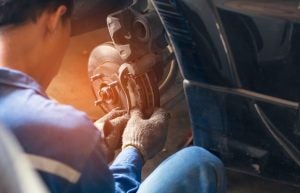
A mechanic performing a brake repair near Anderson, Indiana.

Ensuring your Chrysler or Pacifica's braking system properly works is crucial for road safety. Brake pads play a significant role in this system, as they create the necessary friction when pressed against the rotors to slow down and stop your car. It's important to replace the pads at your Chrysler dealer before they wear too thin and can't provide you with the necessary stopping power to keep you safe behind the wheel. 

Lifespan and Mileage 

The lifespan of pads differs significantly and can range from 30,000 to 80,000 miles, depending on the vehicle you drive, the road conditions, and how frequently you use your brakes. If you drive on quiet country roads, the pads will last much longer than when you brake often or hard on congested roads in heavy traffic. To ensure your safety, replace the pads between 30,000 and 50,000 miles.

Pad Thickness and Measurements

New pads are typically eight to twelve millimeters thick, but the lining will wear down each time you use your brakes. The pads must be at least 6.4 millimeters thick to create the necessary friction to slow down and stop your car.

If they are thinner or the wear indicators start making squealing sounds, replacing the pads as soon as possible is best to prevent brake failure. Ask your Chrysler technician to measure the pad thickness regularly and replace the pads before they wear too thin.

Inspections

Get a comprehensive brake inspection at your dealer from a certified technician at least once a year or every time you take your car for routine maintenance. Regular brake inspections and pad measurements will ensure the pads are replaced before they wear down and get so thin they don't work effectively and cause damage to the rotors. 

Replacement Signs

There are signs to look out for that warn you when to get new pads. The wear indicators built into the pads will make high-pitched squealing sounds when the pads get too thin, and when the linings are worn down, your car will take longer to slow down and stop. In some cases, your car will even start to pull to the left or right when you apply the brakes.

If you don't heed the signs, the pads will soon wear so thin that the bare metal will scrape against the rotors, making hideous grinding noises and causing severe damage that will lead to expensive repairs. 

It's vital to ensure your pads are thick enough to ensure your safety on the road. If you notice your pads are thin or squeal while braking, it's best to get them replaced by a certified Chrysler technician as soon as possible. Call Ed Martin Chrysler Dodge Jeep Ram today to schedule a brake inspection, pad thickness measurement, and a professional replacement with quality pads.

Posted in:

Related Posts

Maintaining Your Jeep's Suspension for Off-Roading

Off-roading enthusiasts should have their suspension inspected and serviced once a year. As your Jeep's suspension and tires handle the myriad bumps and dips of rough off-road tracks, they're put under more strain than usual. Proper maintenance ensures that the struts, shocks, springs, and joints of your Jeep's suspension stay in great shape, evening out your ride no matter the terrain. Here are some important Jeep suspension maintenance guidelines to follow, plus warning signs that your suspension needs attention. more Check Air Pressure in Each Tire Monthly Your suspension connects the wheels to the car, absorbing bumps, dips, and irregularities in the road, providing constant stability and control. For this reason, a large part of suspension maintenance is looking after your tires; the two components have a huge impact on each other. With this in mind, always keep your tires at the PSI recommended in your owner's manual. Improperly inflated tires harm the suspension and put you at risk on the road. It's best to check air pressure once a month or more. Measure Wheel Alignment Twice a Year When off-roading, your tires continuously hit rocks, boulders, tree roots, ruts, and all kinds of rough terrain elements. All these impacts can slowly push wheels out of alignment, which means the suspension has become slightly crooked. Such misalignment is no good for your Jeep. Have your alignment measured twice a year, even more frequently if you off-road regularly, and corrected whenever necessary. Check the Tread Depths of Your Tires Make sure your tires always have sufficient tread depth for your off-road adventures. This is more than the usual 2/32 of an inch in tread depth. It's often recommended to have at least 5/32 of an inch in depth on each wheel for optimal off-road traction. Keep Your Tires Even With Regular Rotations Your Jeep's tires should also be rotated twice a year. This keeps them uniform. Without regular rotations, tires tend to wear down unevenly, putting awkward pressure on the suspension. Schedule Routine Jeep Suspension Maintenance Once a year or more, ask one of our technicians to inspect and test each suspension shock, strut, spring, joint, rod, bar, and arm. We can make adjustments and tighten things up where necessary, and replace any worn-out components. Look Out for Signs of Worn-Out Suspension Parts In addition to the above tips, always respond promptly to indications that your suspension is overly worn. Signs of a developing suspension fault include bouncing after dips and bumps, excessive vibrations, the vehicle leaning toward one corner, and the front dipping excessively when you brake. Visit Ed Martin Chrysler Dodge Jeep Ram in Anderson, IN, for premium customer service, whatever your automotive needs.

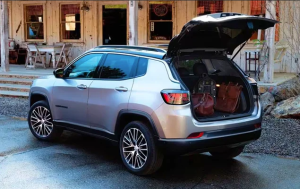
A silver 2024 Jeep Compass parked in front of a house, with it's back trunk open near Anderson, Indiana

Trim Levels of the 2024 Jeep Compass: Customizing Your Adventure

Jeep vehicles have a legendary reputation for their powerful performance and feature-packed interior. Whether you're a seasoned off-roader or looking to explore the great outdoors for the first time, there's a 2024 Jeep Compass trim for every taste. more 1. Sport Forward-thinking safety features and multiple essentials make the entry-level Jeep Compass trim an excellent companion for your daily rides. Under the hood, it is powered by a 2-liter engine that produces an impressive 200 horsepower. Safety technologies include all-speed traction control, blind spot detection, cross-path detection, drowsy driver detection, and full-speed forward collision warning. Speed-sensitive power locks will automatically activate at higher speeds, and the rear window defroster helps melt frost, snow, and ice to improve visibility. In terms of connectivity, passengers can access SiriusXM, a 6-speaker sound system, and a 10.1-inch touchscreen display with Apple CarPlay and Android Auto integrations. 2. Latitude Step up to the Jeep Compass Latitude trim for exciting amenities like premium cloth and vinyl bucket seats that are contoured to seat passengers comfortably and securely. The interior also provides a TechnoLeather steering wheel and a leather-wrapped shift knob. Visibility on the road is enhanced by fog and cornering lamps, overhead console ambient LED lamps, and automatic high-beam headlamp control. 3. Latitude Lux The Compass Latitude Lux trim comes with most Latitude features, plus leatherette seats, a 2-way power lumbar adjustable driver seat, and an 8-way power adjustable seat. Heated front seats and steering wheel provide warmth during cold days. The remote start system allows drivers to start the car's engine with the key fob from a distance. 4. Limited The Limited trim takes your commute up a notch with upgraded driver-help tech and interior luxury features. Key features include exterior mirrors with supplemental signals, front map-pocket LED lamps, and a gloss-black fascia insert and grille with chrome rings. Intermittent windshield wipers turn on automatically, so you won't have to take your hands off the wheel to adjust the wind controls as the rain increases and decreases. 5. Trailhawk Take your driving experience to a whole new level with the sophisticated, adventure-ready Compass Trailhawk trim. It features a black hood decal, neutral gray exterior accents, and black daylight opening moldings that add a stylish touch to the exterior. All-terrain tires improve traction on different surfaces, including on- and off-road. The interior features premium cloth and leather-trimmed bucket seats, a 6-way manual adjustable driver seat, red stitching accents, and all-season floor mats. The luxurious yet versatile 2024 Compass impresses at every trim level. Its state-of-the-art tech is sure to turn every ride into an adventure. Stop by ED Martin Chrysler Dodge Jeep RAM dealership in Anderson, IN, to explore the entire line-up of the 2024 Compass.

Person checking on an engine problem with their car near Anderson, IN

3 Car Engine Problems You Should Always Fix ASAP

An engine is a very complex piece of engineering that requires regular servicing to operate efficiently. Time and damage can result in engine problems and even permanent damage. Your Jeep dealer can speedily repair any problems with your engine. These are a few signs your engine may need a repair. more Slow Starting When you hit the start button, you're used to your Jeep responding almost instantly. If you hit the button and hear your engine is struggling to start, there's a problem. A lack of electrical power usually causes slow starting. Your Jeep's battery sends an electrical charge to the solenoid in the starter motor. The solenoid powers the starter motor, which cranks your engine to life. An old or weak battery may not produce a large enough charge to power the solenoid, and you'll hear the engine laboring as it tries to crank. Starting problems could also be due to a worn alternator that isn't recharging the battery. Damaged or loose electrical connections can also prevent enough power from reaching the battery or the solenoid. We'll investigate the problem and fix it. Oil Leaks Oil is essential for your engine, as it lubricates and protects all the engine components. Many engine parts depend on friction to work effectively, and friction causes damage. The oil coats these components and prevents damage. Engine oil also contains vital additives that reduce rust and prevent blockages in the engine. An oil leak is usually easy to spot as its amber, although it darkens over time. Engine oil can also leak into your exhaust system, and you'll see blue smoke from the tailpipe. A lack of oil will cause engine damage as components grind against each other and can lock together. Our technicians can swiftly trace an oil leak and seal it. Damaged Sensors Your Jeep has numerous sensors inside the engine, and each connects to a vital component. These sensors relay information to your computer continually to enable it to make decisions. They also monitor the health and efficiency of the component they're connected to. Sensors can fail, and their failure can lead to serious trouble. Damaged sensors will send false information to your computer, and this can cause engine damage. A failing oxygen sensor, for example, could over or under-report the oxygen level in the exhaust smoke. Your computer adjusts the air content in the engine based on this sensor, and incorrect information can result in a fuel-lean or fuel-rich engine. We'll test the sensors and replace any damaged ones. Any problem in the engine gets worse if it's not fixed. Call our service department today at Ed Martin CDJR.