Ed Martin Chrysler Dodge Jeep Ram

Blog / Anderson Chrysler Service

3 Signs Your Chrysler Vehicle Needs an Alternator Repair

3 Signs Your Chrysler Vehicle Needs an Alternator Repair
Your Chrysler's alternator has a vital role in your car. It's responsible for producing the energy that your car's electrical systems demand. The alternator is a relatively long-lived component, but it will eventually start to fail. When you need an alternator repair, as your Chrysler dealer in Anderson, IN, we can fix the problem for you.

Dim Lights

Dim bulbs can mean that your headlights are about to blow, but they can also be a sign that you have an alternator problem. A healthy alternator produces more than enough electricity for all of your car's demands. When the alternator gets older, it will start to weaken. A weak alternator will gradually produce less and less electricity. The point will eventually be reached that the alternator can't supply all of your car's electrical demands. When this happens, your car's computer will have to allocate the available power as needed. Dim lights can be the result of this allocation, as the computer is allocating just enough power to allow the lights to come on. If the lights go from being dim to bright, this is a sure sign of an alternator problem.

Dead Battery

Your battery provides the power that's used to start your engine. This power usage, however, uses a large amount of the battery's power which needs to be replaced. One of the functions of the alternator is to charge your battery. Over time, as we've seen, the alternator will provide less power. This reduced power availability will also affect recharging the battery. If your battery isn't being fully recharged, each time it's used it will grow steadily weaker. A weakening alternator can easily drain a new battery. You'll notice that your car takes longer to crank, and this is usually a sign of a weakening battery. Our highly-trained technicians will test your battery and the alternator to see which of them may be the problem.

Battery Warning Light

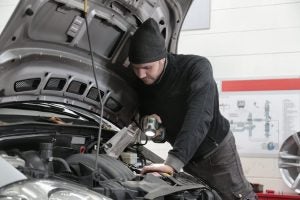
The battery-shaped warning light on your dash represents your Chrysler's electrical system. Sensors are attached to the battery, the alternator, and other sections of your electrical system. These sensors monitor the component they're attached to, and if a problem is detected, they'll send a signal to your car's computer, and the warning light will come on. A weakening alternator can cause the warning light to come on when it drops below the minimum power output your car's electrical systems require. The light could also come on due to a damaged wire, a jammed pulley, or any other problem that affects the electrical system. The light doesn't identify the specific problem, but we can connect your car to our diagnostic system and trace the problem. These are a sample of the possible problems caused by a weakening alternator. The good news is that an alternator will never simply fail, it will always show signs that it's wearing out. If your alternator shows signs of strain, call us ASAP at Ed Martin CDJR.     image courtesy of pexels.com
Posted in:

Related Posts

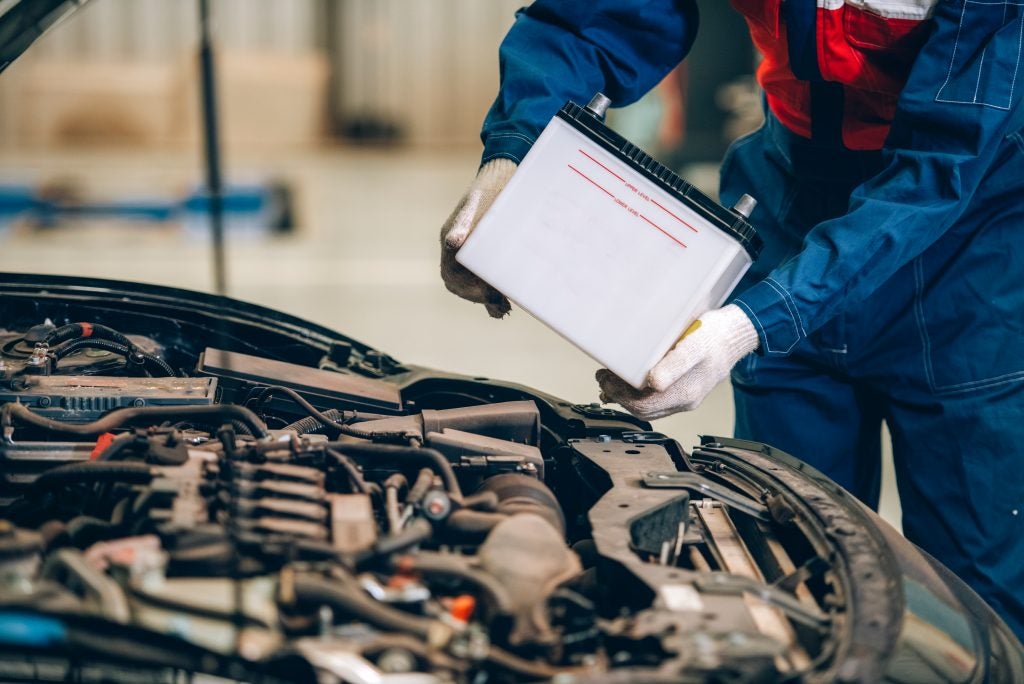
A mechanic wearing blue coveralls and white gloves installs a new car battery under the hood of a vehicle in an auto repair shop.

Chrysler Battery Maintenance: Tips for Optimal Performance

When car batteries fail prematurely, it's typically due to battery-harming driving habits and neglected service. You can keep your battery at optimal power and capacity with sensible Chrysler battery maintenance. The following tips are a great place to start. more Have Your Battery Inspected There's no need to wonder how your battery's doing. A technician can examine it, test it, check the battery's fluid levels, and tell you how much longer it's likely to last. Have your battery inspected routinely once a year, ideally before winter, and also before long trips that will put more strain on your car's electronic system. Keep Your Battery Warm During winter, low temperatures slow down the chemical processes inside a car battery. This forces it to work harder and drains it faster. A battery heater or blanket can protect a car battery from the cold. It's also wise to keep your car parked under the cover of a garage or insulating car cover throughout winter. Clean the Battery's Terminals Once a month, check up on your battery. Make sure it looks clean, undamaged, and free from corrosion. It's also important to clean the terminals because the grease in accumulated dirt or grime can accelerate corrosion. After cleaning the terminals and cables, apply a terminal spray to add a layer of protection against corrosion. Secure the Clamps and Cables It's important to keep your battery firmly secured in place at all times. If the hold-down clamps are loose, the battery will shake and vibrate as you drive, which causes internal damage. Each month, tighten the bolts and clamps of the hold-down, and also make sure the battery's cables are fixed in place. Keep Your Battery Charged When a car battery discharges completely, lead sulfate starts to form on the plates inside it. These sulfate crystals can rapidly harden in a process called sulfation, which reduces the battery's capacity and shortens its lifespan. With this in mind, always try to keep your battery charged and never let it fully deplete. Avoid Short Daily Trips Some drivers only use their cars for short distances of just a handful of miles every day. The thing is, these short trips use more electricity than the alternator can generate, which means the battery is left with less charge after each drive. As a result, the battery deteriorates without the driver knowing it and may fail to start the car one day. You can avoid this by taking longer drives generally or at least one longer trip each week, which can fully recharge the battery and keep it healthy. The lifespan of a car battery will usually range from three to five years. If your battery is getting old, come to Ed Martin Chrysler Dodge Jeep Ram in Anderson, IN.

Ram Tire Care: Ensuring Safety and Longevity

Healthy tires are essential for safe driving, but even the highest quality tires will wear out over time. As your RAM dealership, we'd like you to know a few signs you need to visit us for RAM tire maintenance and possible tire replacement. more Signs You Need RAM Tire Maintenance at Your RAM Dealership Tire Bubble A tire bubble is a raised section on the tire surface that looks like a blister. It's filled with air and is caused when part of the tire is pinched against a solid object. Tire bubbles are more common on the sidewalls, the tire sections perpendicular to the road surface, as they're made from softer rubber than the tread and lack reinforcement. A bubble is dangerous, as the air inside a tire heats up while driving due to surface friction. The rubber forming the bubble is stretched thinner than it should be, and this can cause the bubble to burst and blow out. A tire bubble can't be repaired, as the tire's internal structure is damaged, but we'll replace the tire so you can drive safely again. Worn Tires The tread is the pattern of raised grooves on the tire in contact with the surface. These grooves grip the surface, making handling and control easier and reducing the time needed to stop when you hit the brakes. As time passes, the tread gradually wears down due to surface friction, and your brakes will take longer to engage. Smoother tread also reduces your control when driving on wet, muddy, or snowy surfaces. When the tread drops to 2/32", a tire is badly worn and needs replacement. You can measure your tread using a tread depth gauge or by inserting a Lincoln penny upside down into the deepest part of the tread. If you can see the top of Lincoln's head, it's time to change the tire. Our technicians can replace any worn tires in minutes while you wait. Poorly Inflated Tires Tires have a recommended pressure, and the correct pressure for each tire is listed in your vehicle handbook. It's also marked on a plate or sticker on the inside door jamb of the front passenger door. Correctly pressurized tires have a longer lifespan, save fuel, and provide good surface grip so you can drive safely. Tire pressure will drop if there's a leak, but it also changes depending on the outside temperature. Pressure is measured in PSI, and a tire will change by 1 to 2 PSI for every 10°F change in temperature, with higher outside temperatures increasing the pressure and lower temperatures reducing it. We can test your tire pressure and correct it if needed. If you have a tire problem, contact us today at Ed Martin CDJR in Anderson, IN.

Person checking on an engine problem with their car near Anderson, IN

3 Car Engine Problems You Should Always Fix ASAP

An engine is a very complex piece of engineering that requires regular servicing to operate efficiently. Time and damage can result in engine problems and even permanent damage. Your Jeep dealer can speedily repair any problems with your engine. These are a few signs your engine may need a repair. more Slow Starting When you hit the start button, you're used to your Jeep responding almost instantly. If you hit the button and hear your engine is struggling to start, there's a problem. A lack of electrical power usually causes slow starting. Your Jeep's battery sends an electrical charge to the solenoid in the starter motor. The solenoid powers the starter motor, which cranks your engine to life. An old or weak battery may not produce a large enough charge to power the solenoid, and you'll hear the engine laboring as it tries to crank. Starting problems could also be due to a worn alternator that isn't recharging the battery. Damaged or loose electrical connections can also prevent enough power from reaching the battery or the solenoid. We'll investigate the problem and fix it. Oil Leaks Oil is essential for your engine, as it lubricates and protects all the engine components. Many engine parts depend on friction to work effectively, and friction causes damage. The oil coats these components and prevents damage. Engine oil also contains vital additives that reduce rust and prevent blockages in the engine. An oil leak is usually easy to spot as its amber, although it darkens over time. Engine oil can also leak into your exhaust system, and you'll see blue smoke from the tailpipe. A lack of oil will cause engine damage as components grind against each other and can lock together. Our technicians can swiftly trace an oil leak and seal it. Damaged Sensors Your Jeep has numerous sensors inside the engine, and each connects to a vital component. These sensors relay information to your computer continually to enable it to make decisions. They also monitor the health and efficiency of the component they're connected to. Sensors can fail, and their failure can lead to serious trouble. Damaged sensors will send false information to your computer, and this can cause engine damage. A failing oxygen sensor, for example, could over or under-report the oxygen level in the exhaust smoke. Your computer adjusts the air content in the engine based on this sensor, and incorrect information can result in a fuel-lean or fuel-rich engine. We'll test the sensors and replace any damaged ones. Any problem in the engine gets worse if it's not fixed. Call our service department today at Ed Martin CDJR.