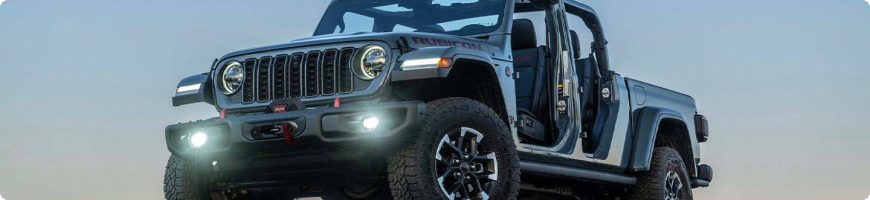
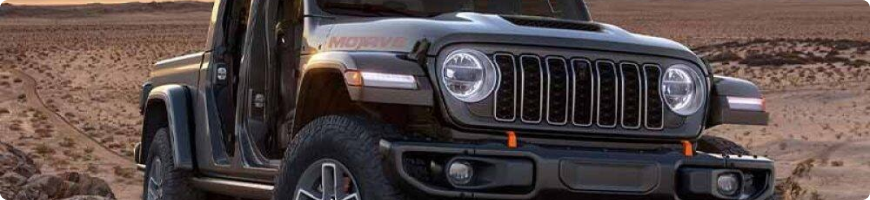
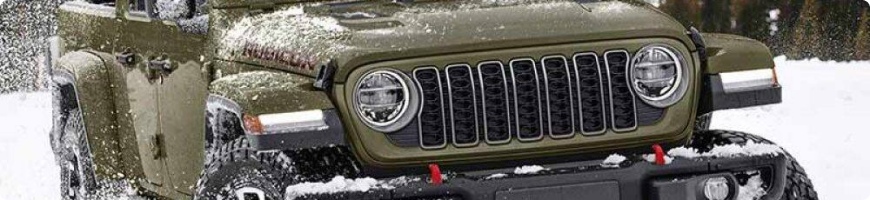
2026 Jeep Gladiator: The Only Pickup You Can Take the Roof Off Of
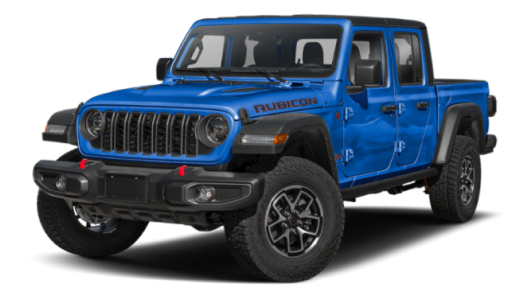
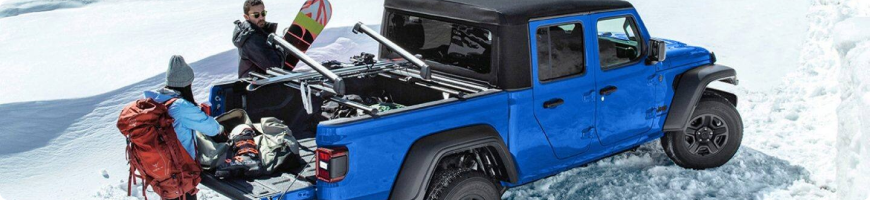
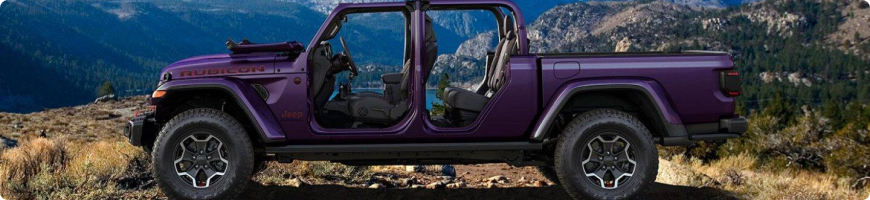
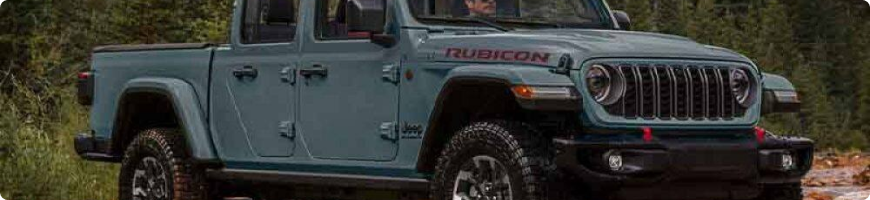
The Gladiator is a midsize pickup with a 60.3-inch box behind the cab and a roof and doors that come off in your driveway.
Nothing else on sale does both. It seats 5, runs a 285-hp V6 through an 8-speed automatic, and tows anywhere from 4,500
lbs to 7,700 lbs depending on which one you buy. That last number is the one people get wrong, and it is the one to settle
before you sign, so start with what is in our
Gladiator inventory.
Key Facts
Specification
2026 Jeep Gladiator
Body
Midsize 4-door pickup, removable roof and doors
Seating
5
Engine
3.6L V6, 285 hp, 260 lb-ft
Transmission
8-speed automatic
Drivetrain
4-wheel drive
Towing
4,500 lbs on a Sport, 7,700 lbs on a Rubicon
Payload
1,025 lbs on a Sport, 1,200 lbs on a Rubicon
Bed length
60.3 in
Bed volume
35.5 cu ft
Overall length
218 in
Fuel
Regular, 22-gallon tank
EPA-estimated
17 city / 22 hwy / 19 combined MPG
Starting MSRP, Sport
$39,820
The Sport’s $39,820 and the Rubicon’s $52,520 are both MSRPs at launch for the 2026 model year, excluding destination,
which was a separate $1,995 charge. What any individual truck costs turns on its equipment and on the incentives running
at the time.
Gladiator or Wrangler
Most people looking at a Gladiator are also looking at a Wrangler, and the honest way to settle it is to stop
comparing them as two Jeeps and start comparing what happens when you need to carry something dirty.
The Gladiator has a pickup box. The Wrangler does not. That is the whole decision for most buyers, and everything else
follows from it. A 60.3-inch bed with a drop tailgate takes mulch, a dirt bike, wet kayaks, and lumber that would never
go inside a vehicle. The Wrangler makes you put all of that in the cabin, on the seats, behind the people.
What it costs you is length. At 218 inches the Gladiator is a genuinely long vehicle, closer to a full-size truck than
to a Wrangler in a parking garage or a tight trailhead turnaround. It seats 5 either way, and it takes its roof and
doors off the same way.
So: if you have ever wished you could throw something in the back without thinking about it, take the Gladiator. If you
have never once needed a bed and you park in town, look at a
Wrangler
instead and enjoy the shorter truck. They share the same engine, and neither one is a compromise version of the other.
The Engine
Every 2026 Gladiator gets the same setup: a 3.6L V6 making 285 hp at 6,400 rpm and 260 lb-ft at 4,400 rpm, an 8-speed
automatic with sequential shift control, 4-wheel drive, and regular fuel out of a 22-gallon tank.
Specification
2026 Gladiator
Engine
3.6L V6, naturally aspirated
Horsepower
285 hp @ 6,400 rpm
Torque
260 lb-ft @ 4,400 rpm
Transmission
8-speed automatic, sequential shift control
Drivetrain
4-wheel drive
Fuel
Regular unleaded, 22-gallon tank
EPA-estimated
17 city / 22 hwy / 19 combined MPG
One engine across the whole range makes the rest of your shopping simpler, because no trim decision is also secretly an
engine decision. It does mean fuel economy is a fixed cost of owning a Gladiator rather than something you can option
your way out of: 19 MPG combined is what this vehicle does, and a 22-gallon tank means roughly 400 miles of mixed
driving between fills.
Towing and Payload, by Trim
Here is the number that surprises people. There is no single Gladiator tow rating. A Sport and a Rubicon are rated
more than 3,000 lbs apart, and the trim you pick decides which one you get.
Rating
Gladiator Sport
Gladiator Rubicon
Towing
4,500 lbs
7,700 lbs
Payload
1,025 lbs
1,200 lbs
GVWR
5,800 lbs
6,250 lbs
Curb weight
4,695 lbs
5,031 lbs
In real terms, a Sport’s 4,500 lbs is a pair of personal watercraft, a small utility trailer, or a 16-foot aluminum
fishing boat you would take out on the White River. At 7,700 lbs a Rubicon reaches a small travel trailer, a two-place
enclosed snowmobile trailer, or a skid steer on a landscape trailer.
Payload is the other half, and it is the half people forget. It is the weight the truck carries rather than pulls:
passengers, the toolbox, whatever is in the bed, and the downward push of a trailer tongue. Around 1,000 lbs sounds like
plenty until four adults and a full bed of mulch are in it.
Two habits keep you honest. Weigh a trailer loaded rather than dry, because a camper’s dry weight carries no water, no
propane and no gear, and a weekend’s worth adds hundreds of pounds. And confirm the rating on the specific truck you are
buying rather than on the trim name, because ratings move with how a truck is built. Tell us what you plan to pull and
we will check it against the build sheet with you.
The Bed
The Gladiator’s box is a real pickup bed, not a styling exercise.
Measurement
Gladiator bed
Length
60.3 in
Width, minimum
44.8 in
Width, maximum
56.8 in
Depth
33.9 in
Volume
35.5 cu ft
On plywood sheets: 44.8 inches between the wheel housings is the measurement that decides, because a
typical wood sheet is 48 inches wide. It will not sit flat on the floor between the arches, but it will lay across them
with the tailgate down.
On loose material: 33.9 inches of depth is enough that mulch, gravel and firewood sit below the rail
line instead of piling over it.
On everything else: a five-foot bed puts dirt, fuel cans, wet gear and anything that smells outside the
cabin. That is the practical difference between a Gladiator and an SUV, and it never shows up in a spec comparison.
Inside the Cab
Measurement
Front
Rear
Head room
42.8 in
42.8 in
Leg room
41.2 in
38.3 in
Shoulder room
55.7 in
55.7 in
Hip room
53.9 in
55.9 in
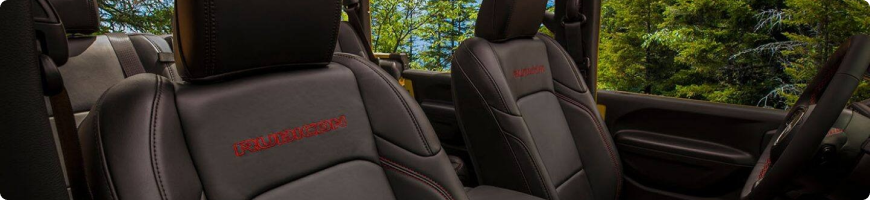
Head room is identical front and rear at 42.8 inches, which is unusual and is a direct result of the boxy roofline.
Nobody in this truck is ducking.
The back seat gives up 2.9 inches of leg room to the front, which puts it in normal midsize crew-cab territory: fine for
adults on a trip across the county, tighter than a full-size truck on a long haul. It is a 60/40 split bench that folds,
so you can carry two passengers and a long item inside, out of the weather, when the bed is already full or wet.
Total passenger volume is 103 cubic feet. The thing a number cannot tell you is how the cabin feels with the roof off.
The Trim Ladder
The Gladiator ladder is wide, and the trims split into three groups rather than one straight climb.
Trim group
The trims
Best for
The work and value end
Sport, Sport S
Buyers who want the bed, the roof and the 4-wheel drive without paying for hardware they will not use. This is
where the $39,820 launch price lives
Buyers who want a particular look and a particular equipment mix. These separate on appearance and content, not on
a single capability ladder, so drive the two you like
The serious off-road builds
Mojave, Mojave X, Rubicon, Rubicon X
Buyers who actually leave pavement. Rubicon is the rock-crawling build and the one rated to tow 7,700 lbs; Mojave
is the high-speed desert-running build
Two things to know about this table. The middle group is genuinely a matter of taste and equipment rather than
capability, so nobody should feel they are buying “less truck” by choosing one. And the tow and payload gap between the
ends of the ladder is large enough that it should be part of your trim decision rather than an afterthought.
Our Jeep specials change monthly, so see our
new vehicle specials for the deals
running now, and our
Gladiator inventory
for what each build actually sells for.
Which Trim Should You Choose?
Start with towing, because it is the one thing on this truck a trim decision genuinely locks in. If you will pull
anything heavier than a small boat, the answer is at the Rubicon end and no amount of later optioning fixes a Sport
that is 3,200 lbs short.
If you will not tow much, that constraint disappears and the whole ladder opens up. Then it is a question of where you
drive.
The everyday truck buyer: you want the bed, the doors off in summer, and a payment that makes sense.
Sport or Sport S. You are giving up rock-crawling hardware you were never going to use.
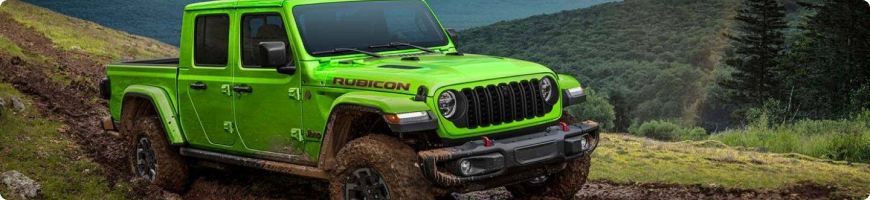
The trail buyer: you go to actual off-road parks and you want the truck to come back. Rubicon, and
drive a Mojave back to back with it, because they are built for opposite kinds of terrain and the one you enjoy is not
always the one on paper.
The buyer who wants it to look right: Willys, Sahara and the special editions exist for you and there
is nothing wrong with that. Just check the tow number on the truck itself if a trailer is anywhere in your future.
If a trade-in is part of the math, settle that first.
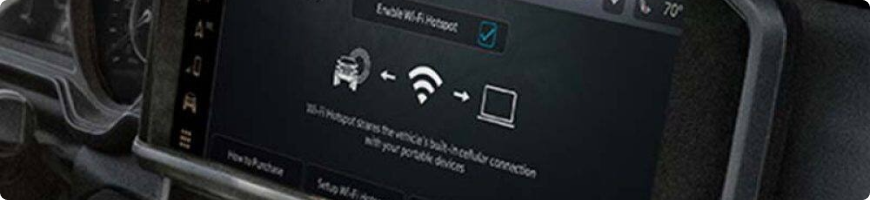
Available across the Gladiator range are Adaptive Cruise Control, Blind Spot Monitoring and Rear Cross Path Detection,
along with a Uconnect touchscreen, a digital cluster display, and a media hub with USB ports.
Two features are worth calling out because they exist for this truck specifically. Off-Road Adventure Guides puts trail
routes and vehicle information on the touchscreen. The TrailCam Off-Road Camera shows you what is directly in front of
the truck, which is exactly the view a tall hood takes away from you when you are picking a line over a rock or a rut.
Availability varies by trim and by how a particular truck was built, so the window sticker is where a specific vehicle’s
equipment is listed. Tell us which of these matters to you and we will find one that has it.
Safety
NHTSA has not tested the 2026 Gladiator, so it holds no overall star rating. Not rated is not a poor score; it means
the agency has not run this vehicle through its program. Ratings change as new tests are published, so check NHTSA.gov
for the latest.
On the equipment side, the driver-assistance features listed above are available rather than standard across the range,
and what a given truck carries is on its window sticker. If a specific system matters to you, tell us before you shop
and we will check it on the trucks we have.
Warranty
Coverage
Term
Basic limited warranty
36 months / 36,000 miles
Powertrain limited warranty
60 months / 60,000 miles
Corrosion perforation
60 months / unlimited miles
24-hour roadside assistance
60 months / 60,000 miles
The corrosion term is the one to notice on a truck in this state. It runs 5 years with no mileage limit, and
rust-through is the failure mode that matters most on a vehicle parked outside through an Indiana road-salt winter. If
you take the doors off all summer and drive it through February, that coverage is doing real work.
Buying a Gladiator in Central Indiana
A Gladiator is a good fit for how this part of the state actually is. Central Indiana is a glaciated till plain, which
means flat to gently rolling farmland and a lot of gravel county roads between the towns. The White River runs through
Anderson for anyone with a boat or a kayak, Mounds State Park sits just east off I-69, and the Cardinal Greenway is
close enough that bikes in the bed is a normal Saturday.
We answer the price question with Up Front Guaranteed Pricing, which puts the figure on the window and leaves it there.
The rest is worth doing in person, and three things settle it faster than any spec table. Take the doors off with us,
because how easy that is decides how often you will actually do it. Put whatever you normally haul in the bed, since
60.3 inches either works for your gear or it does not. And bring the trailer if you have one, so we can check its loaded
weight against the truck’s own rating rather than a trim name.
Every new Gladiator we sell comes with a complimentary first oil change, original owners get free car washes for life,
and our
service department
is open Saturdays. We are a straightforward drive from Noblesville, Fishers, Indianapolis and Muncie; our
hours and directions
has the route. If you would rather settle the money first, our
financing team works
across the full range of credit situations, including buyers new to the country or turned down somewhere else. A factory
Certified Pre-Owned Jeep is the
other route, with a 125-point inspection and a CARFAX report on every one.
Frequently Asked Questions
It depends on the trim, and the spread is wide: a Sport is rated at 4,500 lbs and a Rubicon at 7,700 lbs. There
is no single Gladiator number, which is why the trim decision and the towing decision are really one decision.
Confirm it on the truck you are actually buying before you commit to a trailer.
The Gladiator has a pickup bed and the Wrangler does not. Both seat 5, both take their roof and doors off, and
both use the same 3.6L V6. The Gladiator is 218 inches long, which is a lot of vehicle to park, and that length
is what buys you the 60.3-inch box. If you would use a bed, take the Gladiator; if you never would, the
Wrangler
is the easier vehicle to live with.
It is 60.3 inches long, 44.8 inches wide between the wheel housings and 56.8 inches at its widest, 33.9 inches
deep, and 35.5 cubic feet in volume. Plywood will not lie flat between the arches, but it will ride across them
with the tailgate down.
A 3.6L V6 making 285 hp and 260 lb-ft, paired with an 8-speed automatic and 4-wheel drive. It is the only engine
offered, so no trim choice is secretly an engine choice.
The EPA estimates are 17 city, 22 highway and 19 combined. With a 22-gallon tank that is roughly 400 miles of
mixed driving between fills.
Yes, and so do the doors. It is the reason most people buy one. Come do it with us once before you buy so you
know what is involved rather than reading about it.
Five. The rear seat is a 60/40 split bench that folds, so you can carry two passengers and something long inside
when the bed is full or wet.
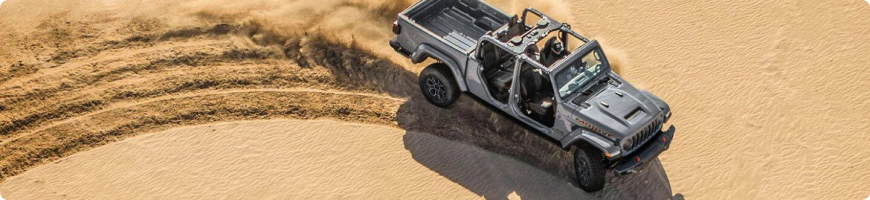
The Rubicon is the rock-crawling build and the Mojave is set up for high-speed running on sand and open
desert-style terrain. They are genuinely different, not two versions of the same idea, so drive both if you can.
NHTSA has not tested it, so it holds no overall star rating. That is not a poor score, only an absence of one.
Ratings change as new tests are published, so check NHTSA.gov for the latest.
The Sport launched at $39,820 and the Rubicon at $52,520, both excluding a $1,995 destination charge. What an
individual truck costs turns on its equipment and on the incentives running, so check the
new vehicle specials for
the deals running now.